Overview
Ultra-low surface energy — water rolls right off
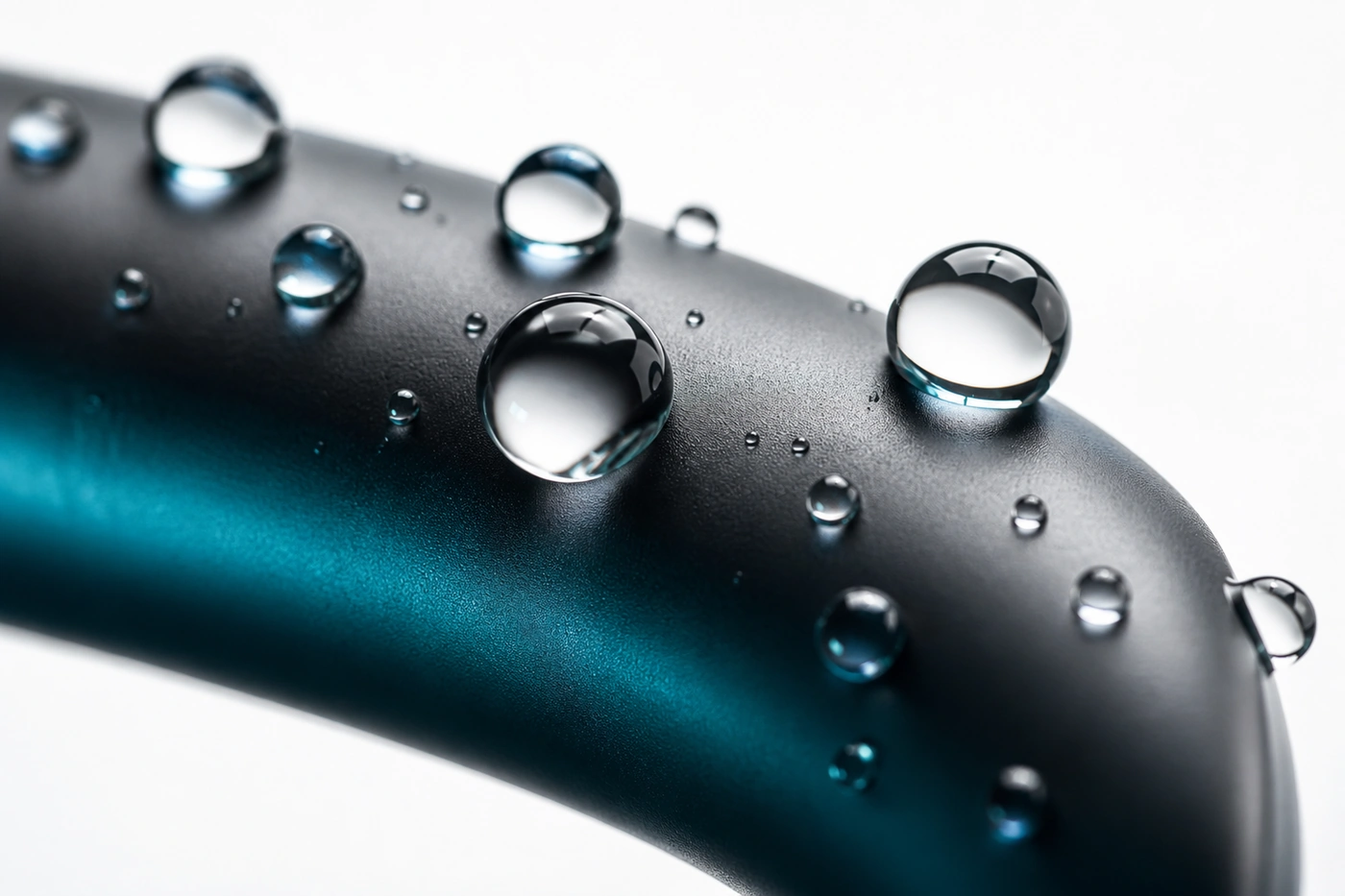
MediShield™ Superhydrophobic Coating is engineered to repel water and bodily fluids by creating an ultra-low surface-energy barrier that keeps devices clean, dry, and resistant to contamination. The coating creates a surface on which water beads up and rolls off with a sliding angle below 10°.
This property is particularly valuable for fluid-contact components where wetting can impede device function, and for external medical devices where protection from moisture is critical to electronics longevity and performance.
Benefits
Biocompatible: Tested according to ISO 10993 standards
Exceptional Hydrophobicity: Water contact angle > 150°, water sliding angle < 10°
Strong Adhesion: Forms a durable bond with a wide range of substrates
Excellent Stability: Maintains hydrophobic performance after long-term storage
Application examples
Fluid-contact components in pumps or cartridges — reduces wetting and facilitates complete fluid evacuation
Wearable or external medical devices — protects electronics and surfaces from moisture
Surfaces requiring contamination resistance
Diagnostic devices exposed to blood or biological fluids
Performance Data
Water droplet on MediShield™ Superhydrophobic surface — contact angle >150°, bead-up behavior
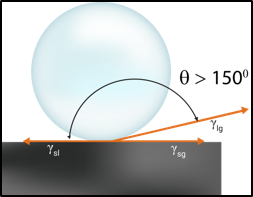
Water contact angle of MediShield™ Superhydrophobic Coating
Performance specifications
| Parameter | Value |
|---|---|
| Water contact angle | > 150° (superhydrophobic range) |
| Water sliding angle | < 10° |
| Biocompatibility | Tested per ISO 10993 |
| Long-term stability | Maintains performance after storage |
| Quality system | ISO 13485:2016 |