Overview
PTFE-grade lubricity — without the PFAS
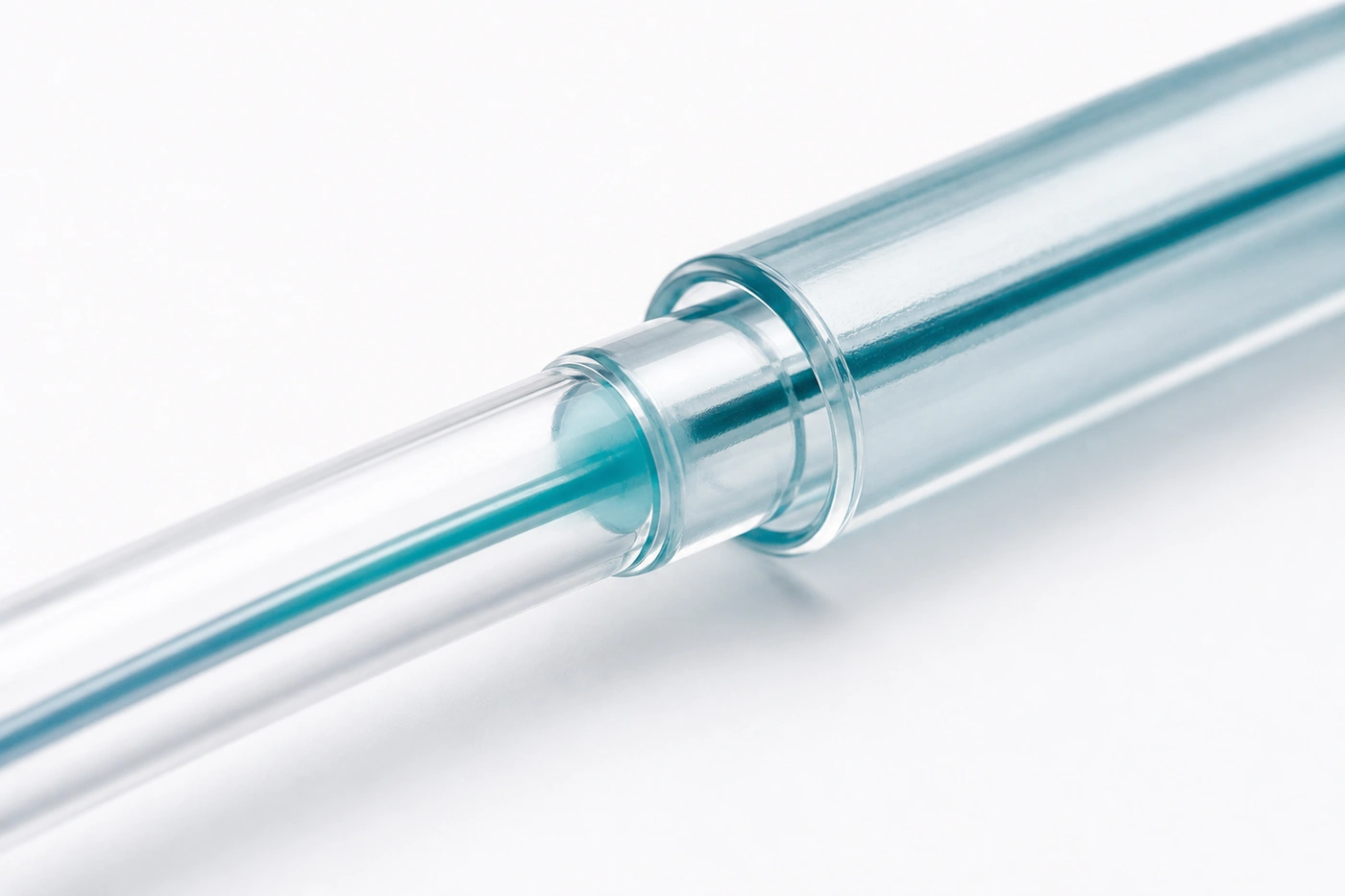
MediShield™ MSLIP Coating is engineered to provide exceptional dry lubricity for medical devices that must slide smoothly against another surface — for example, a tube moving within an over-tube. Its performance is comparable to PTFE coatings, while offering the added benefit of being completely PFAS-free.
This makes MSLIP the coating of choice for device manufacturers facing EU REACH restrictions on PFAS in medical devices and increasing FDA attention to fluoropolymer use in device components. Customers achieve equivalent lubricity performance while eliminating regulatory and supply-chain risk associated with PFAS-containing materials.
Benefits
Biocompatible: Tested according to ISO 10993 standards
Exceptional Dry Lubricity: Coefficient of friction comparable to PTFE
Strong Adhesion: Durable bonding to many substrates
Excellent Durability: Maintains lubricity performance through repeated testing
PFAS-Free: Contains no per- and polyfluoroalkyl substances
Application examples
Endoscopy over-tube systems
Catheter delivery systems
Guidewire sheaths
Insertion tubes for diagnostic instruments
Performance comparison vs. PTFE
| Test Parameter | Standard | PTFE | MSLIP Coating |
|---|---|---|---|
| Static CoF | ASTM D1894 | 0.08–0.12 | 0.08–0.12 |
| Dynamic CoF | ASTM D1894 | 0.07–0.11 | 0.07–0.11 |
| Tensile Strength (MPa) | ASTM D638 | 20–50 | 30–60 |
| Ultimate Elongation (%) | ASTM D638 | 200–400 | 300–500 |
| Water Contact Angle | — | 100°–120° | 100°–120° |
| PFAS content | — | Yes | Zero |
Frequently Asked Questions
How does MSLIP compare to PTFE coating in performance?
MediShield™ MSLIP matches PTFE in both static and dynamic coefficient of friction (0.07–0.12 range), with comparable water contact angle (100°–120°). MSLIP exceeds PTFE in tensile strength and elongation, while being 100% PFAS-free — eliminating the regulatory risk associated with fluoropolymer coatings.
When should I choose hydrophobic MSLIP vs. hydrophilic lubricious coating?
Use MSLIP for devices that slide in dry or ambient environments — tube-in-tube systems, delivery sheaths, diagnostic insertion tubes. Use hydrophilic lubricious coating for devices that operate in wet physiological environments — intravascular catheters, guidewires navigating vasculature. MSLIP does not activate with water; it provides lubricity regardless of moisture.
Is MSLIP coating PFAS-free?
Yes — 100% PFAS-free, containing no per- and polyfluoroalkyl substances. This distinguishes it from conventional PTFE-based dry lubricity coatings and positions it for compliance with EU REACH and evolving FDA guidance on PFAS in medical devices.
What regulatory documentation do you provide for PFAS-free compliance?
We provide a written PFAS-free material declaration confirming that no per- and polyfluoroalkyl substances are present in any MediShield™ MSLIP coating formulation. This declaration can be incorporated into your EU Technical File or FDA submission package. We also provide ISO 10993 biocompatibility test data.
Which substrates is MSLIP compatible with?
MSLIP coating is compatible with a wide range of medical polymers and metals, including polyurethane, silicone, polypropylene, nylon (PA12), Pebax®, stainless steel, and nitinol. Substrate-specific compatibility and CoF performance are characterized during feasibility testing with your actual device materials.
How long does MSLIP coating maintain its lubricity through repeated actuation?
MSLIP coating demonstrates superior retention of lubricity performance through repeated actuation cycles compared to physically adhered dry lubricant coatings. Durability data under your specific use conditions is generated during the feasibility program.
Can MSLIP replace PTFE on an existing validated device without re-qualification?
A complete switch from PTFE to MSLIP coating on a regulated device will generally require performance equivalence data for your regulatory submission. Medical Surface can design a comparative test program (CoF, adhesion, durability) with PTFE as the comparator — generating the data you need to support a substantial equivalence argument or design change assessment.