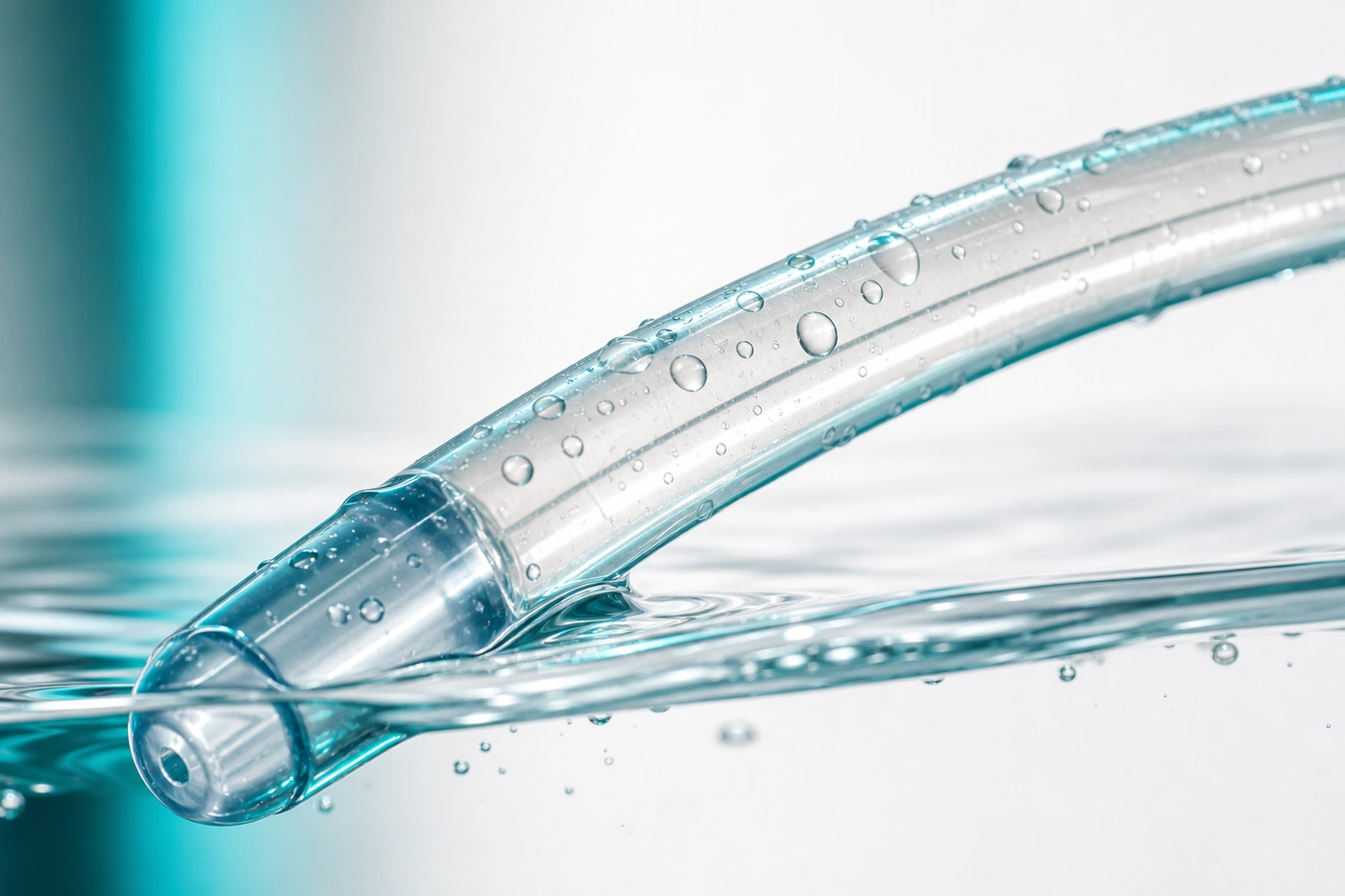
Medical Surface develops surface coatings for any medical device surface requirement. Our MediShield™ platforms below are our most commonly deployed coating families. If your device requires a surface property not listed here, our engineers develop custom coating formulations to your specification.
Standard platforms — click to jump to any coating
| Coating | Environment | Key Performance | Primary Applications |
|---|---|---|---|
| Hydrophilic Lubricious | Wet | CoF < 0.1 | Catheters, guidewires, IOL cartridges, stent delivery |
| Hydrophobic Lubricious (MSLIP) | Dry | CoF 0.07–0.12 (PTFE-grade) | Over-tubes, delivery sheaths, diagnostic insertion tubes |
| Superhydrophilic | Wet | Contact angle < 20° | Optical surfaces, diagnostic imaging windows, contact lenses, microfluidics |
| Superhydrophobic | Dry | Contact angle > 150°, sliding angle < 10° | Wearables, fluid-contact pump components, contamination-sensitive surfaces |
| Biocompatible | In vivo | Anti-fouling: protein, cell & bacterial resistance | Implanted biosensors, CGM sensors, indwelling devices |
| GLM / Diffusion-Limiting | In vivo | 0–30 mM glucose linearity | CGM / wearable sensors |
| Tie-layer Coating | Wet/Dry | Adhesion, compatibility, and durability | Bonding polymer and metal layers, such as laser-cut hypotubes |
| Encapsulation Coating | Wet/Dry | Barrier protection, insulation, and durability | Protective barrier sealing/insulating sensitive components |
High-performance wet lubricity for catheters, guidewires, and interventional devices. When hydrated, the coating forms a polymer hydrogel layer that reduces the coefficient of friction to well below 0.1 — enabling devices to navigate complex vasculature with significantly less resistance and tissue trauma.
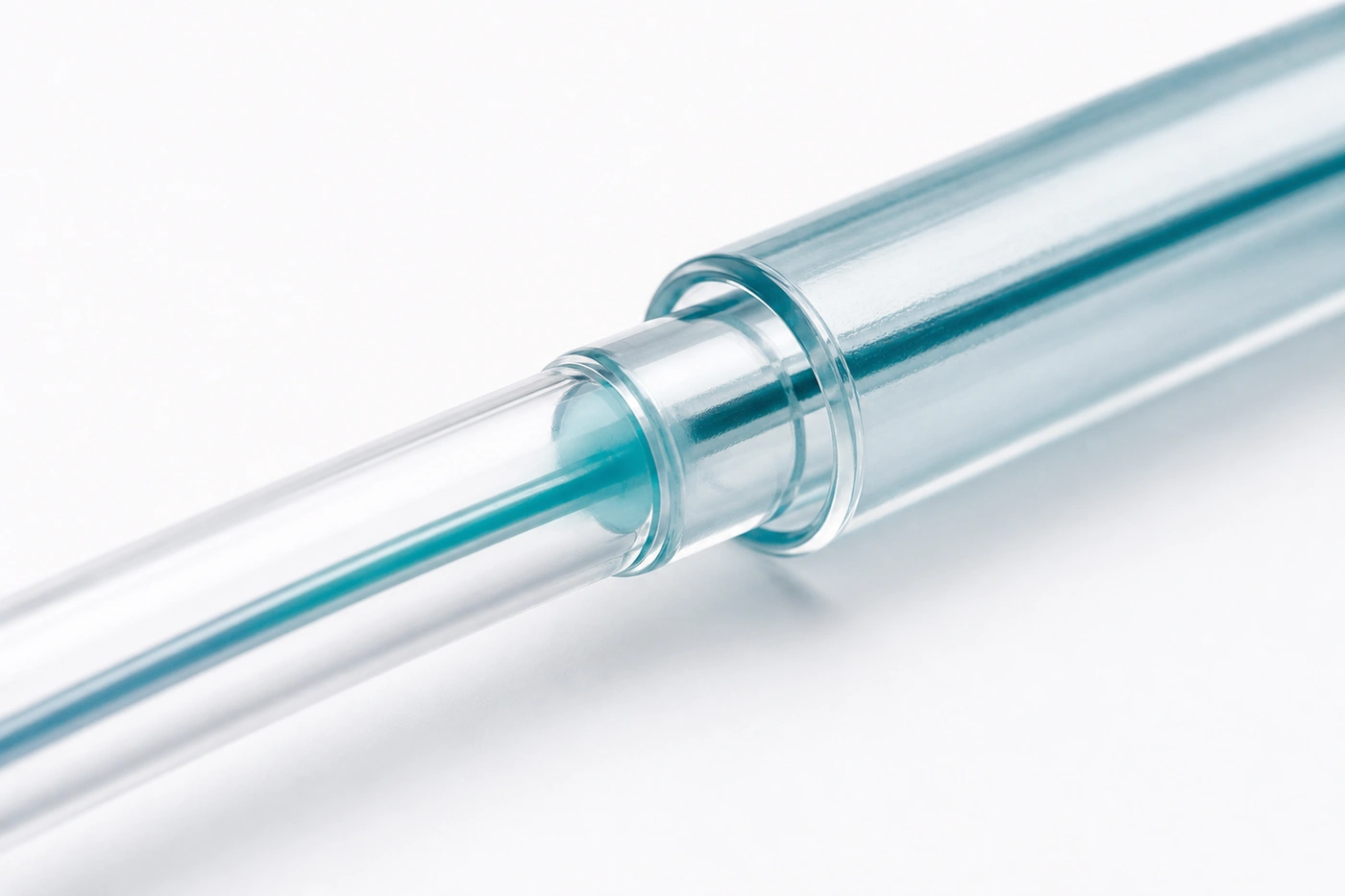
PTFE-comparable dry lubricity with zero PFAS. Engineered for devices that must slide smoothly in ambient or non-aqueous environments — including tube-in-tube systems and catheter delivery sheaths. Matches PTFE in both static and dynamic coefficient of friction while eliminating all fluoropolymer chemistry.
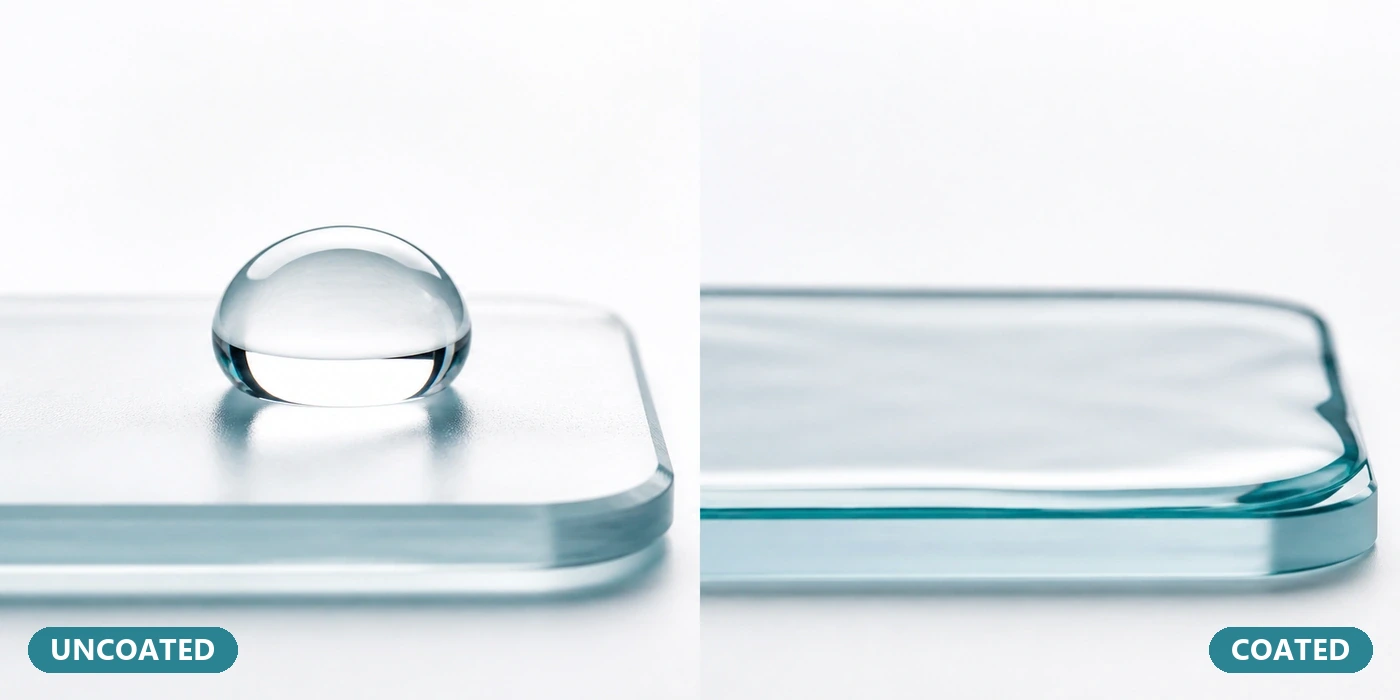
Dramatically increases surface wettability for rapid and uniform water spreading. Enhances visualization, fluid management, and device performance across clinical applications. Achieves water contact angle below 20° — water spreads instantly rather than beading. Compatible with gamma, ETO and steam sterilization.
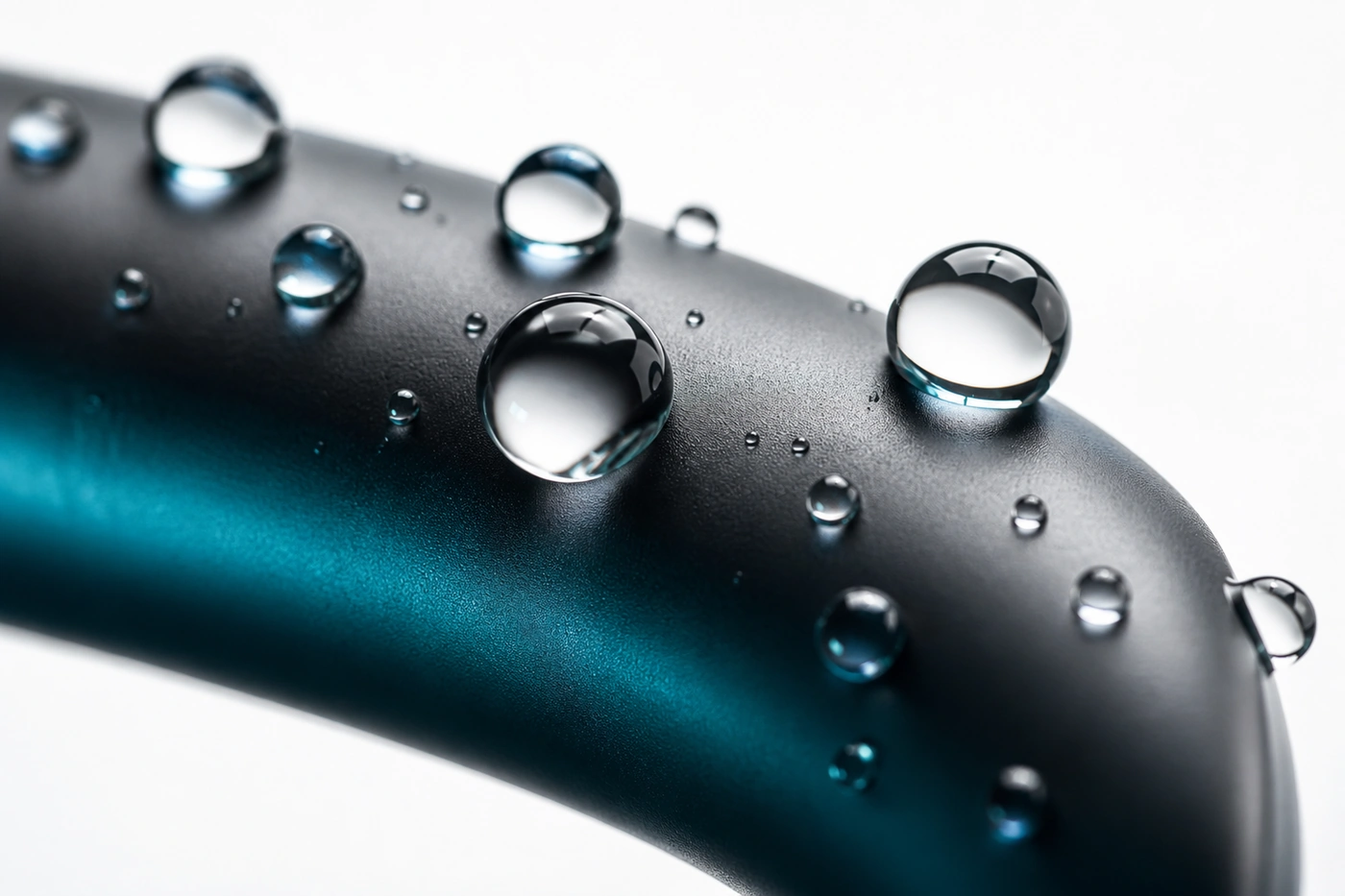
Creates an ultra-low surface-energy barrier that repels water and bodily fluids — keeping devices clean, dry, and resistant to contamination. Water contact angle above 150° with a sliding angle below 10°. Particularly valuable for wearable devices requiring moisture protection and fluid-contact components in pumps and cartridges.
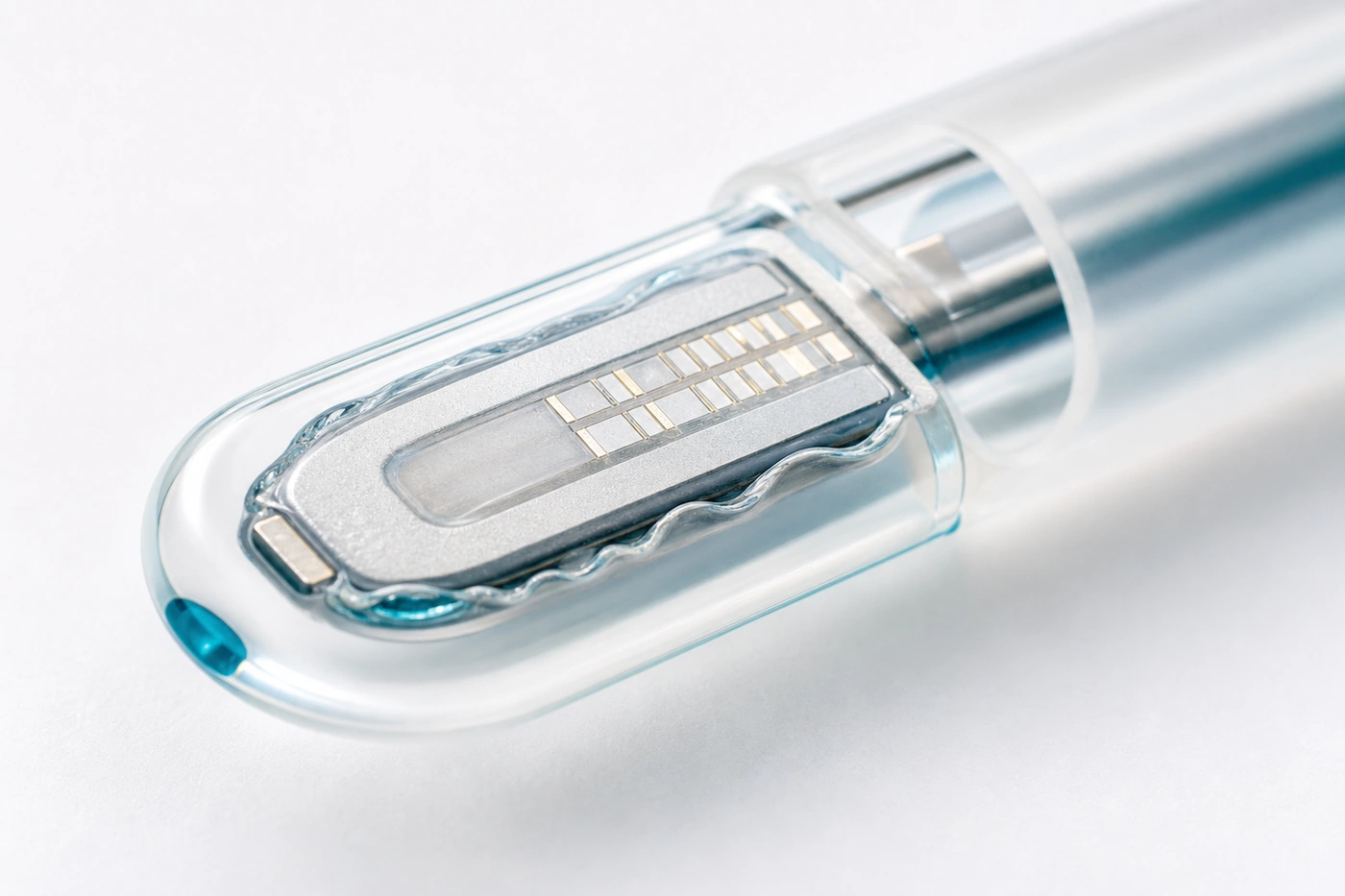
Innovative hydrogel coating that limits the Foreign Body Response and extends the life of implanted devices and biosensors. Resists protein adsorption, cellular adhesion, and bacterial adhesion (tested per ISO 22196 — no detectable S. aureus or E. coli). Highly permeable to glucose — compatible with CGM sensor applications.
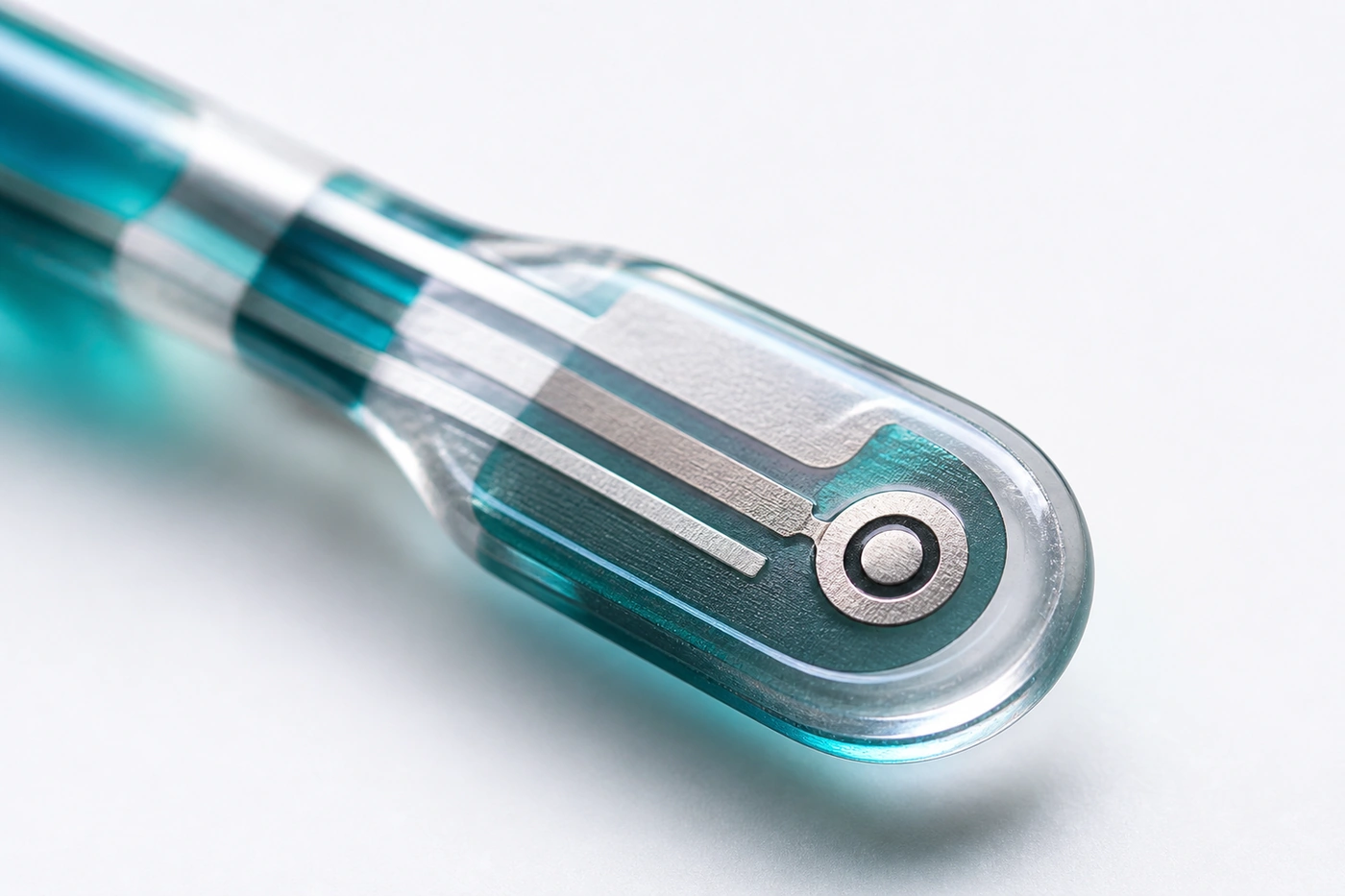
Precision-tunable polymer membranes that control analyte transport to the sensing layer. Selectively restricts glucose permeation while maintaining near-maximal oxygen transport — extending the linear detection range of glucose sensors from ~10 mM to the full clinical range of 0–30 mM.
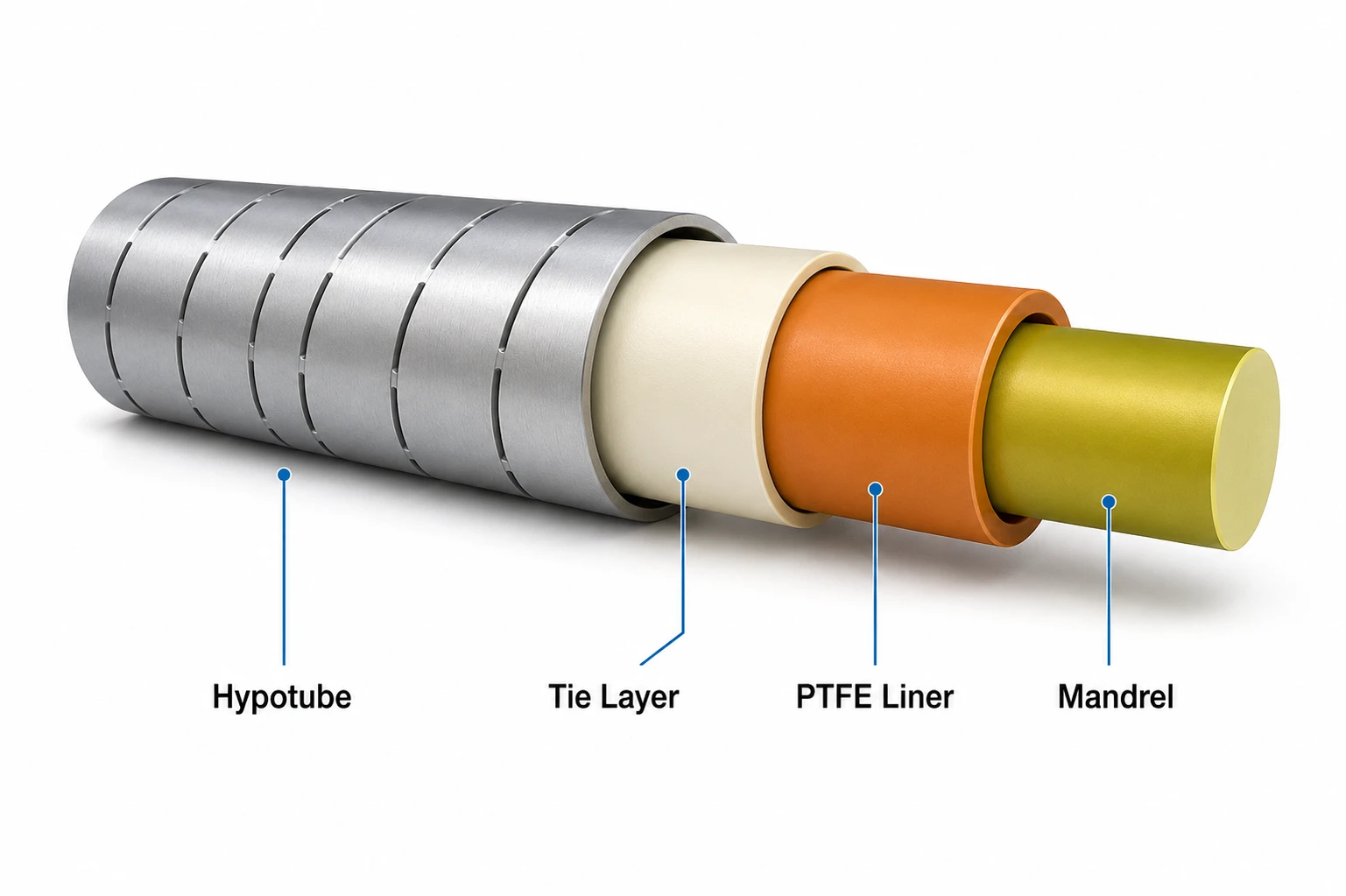
Engineered interlayer that promotes adhesion, compatibility, and durability between dissimilar materials — most commonly used to bond polymer and metal layers, such as on laser-cut hypotubes.
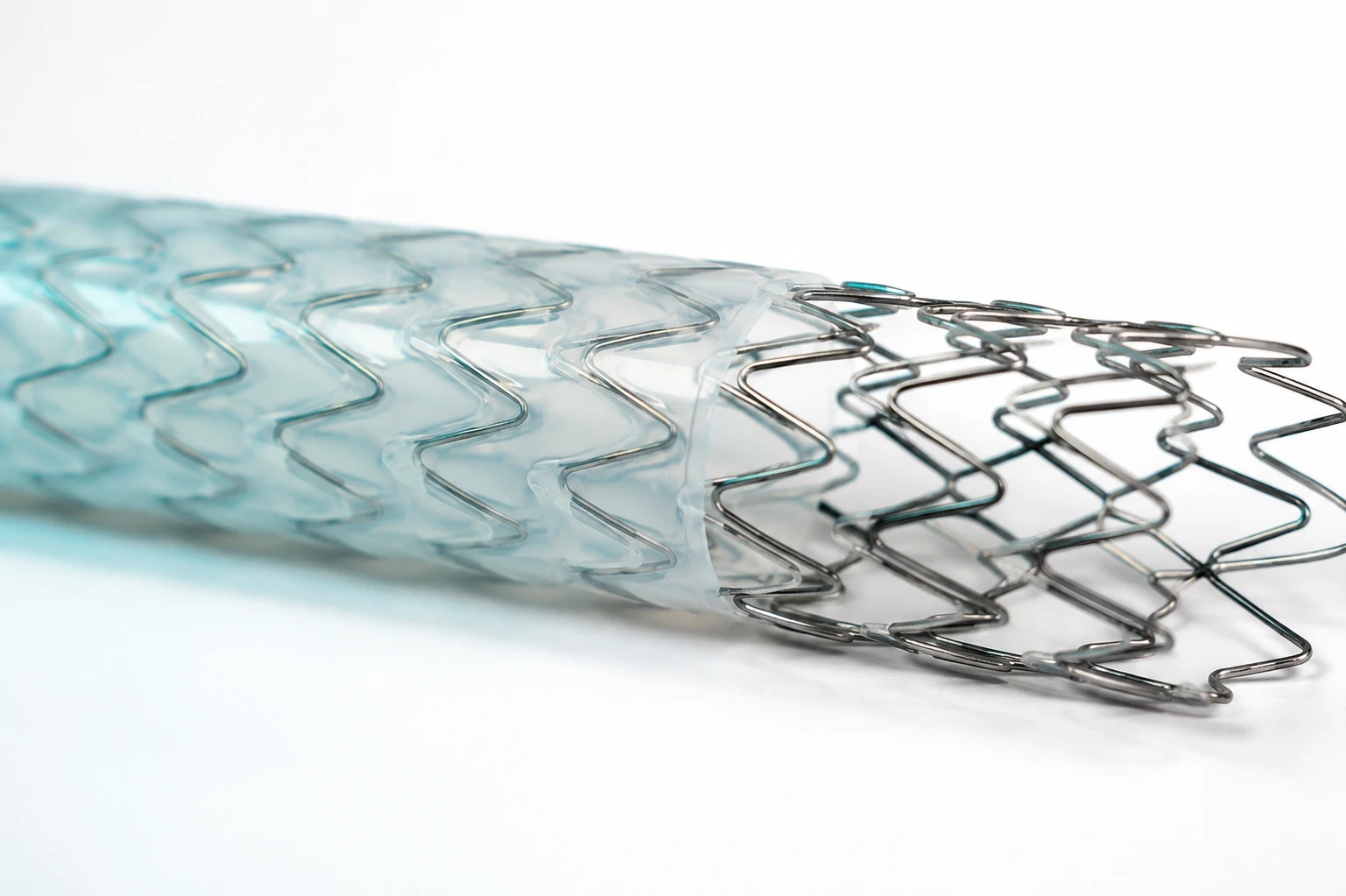
Conformal protective barrier that seals and insulates sensitive components, providing barrier protection, insulation, and durability for devices exposed to fluid or ambient environments.
Our MediShield™ platforms are the most common starting points, but our proprietary coating process is not limited to them. Our proprietary coating process gives us the ability to engineer coatings to a specific surface property target that doesn't fit a standard category.
If you describe the functional requirement — CoF target, contact angle range, analyte selectivity, drug release kinetics, electrical conductivity — we design the coating chemistry to match it. Custom projects follow the same feasibility → optimization → qualification pathway as standard platform work, with full ISO 13485-certified documentation at every stage.
Discuss a custom coating requirementExamples of custom coating work
Controlled release of therapeutic or antimicrobial agents from the device surface — tunable release kinetics
Surface-active coatings that inhibit bacterial colonization — for catheters, implants, and wound care devices
Phosphorylcholine-mimetic and zwitterionic coatings that resist thrombosis on blood-contacting surfaces
Electrically active surfaces for neural interfaces, biosensor electrodes, and electrostimulation devices
Analyte-selective membranes for biosensors targeting non-glucose analytes — lactate, creatinine, urea, oxygen
If your requirement doesn't fit a standard category, contact us directly and describe the surface property you need — we'll tell you whether it's feasible and what a development program would look like.
Contact us to discuss your application and request a feasibility study.