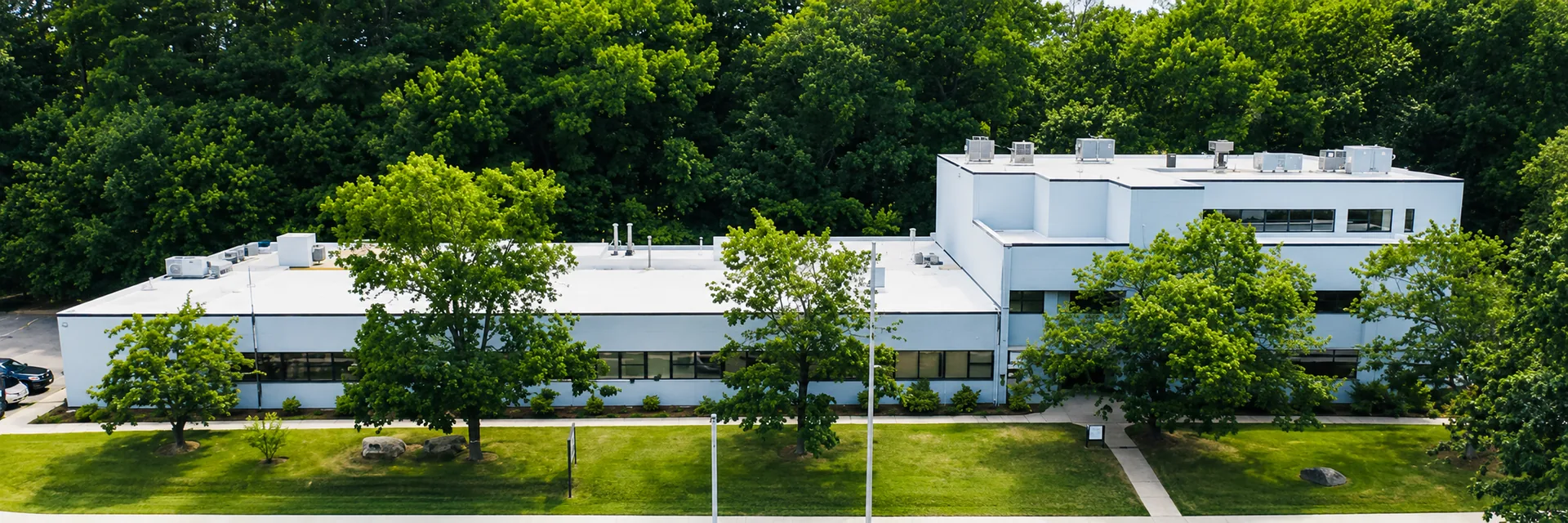
Medical Surface is located in the greater Boston medical device corridor
About Medical Surface

Engineering surfaces that perform inside the body

Medical Surface develops proprietary polymer coatings that solve the hardest surface engineering challenges in medical device design. We work with R&D engineers and scientists at OEMs — from early feasibility through ISO 13485-certified contract coating production.

ISO
13485:2016 Certified QMS
8+
MediShield™ coating platforms
MA
Natick · Boston life sciences corridor
Our Story

Founded on the principle that coatings should be engineered, not just applied

Medical Surface was founded on a single insight: the best medical device coatings require molecular-level control that conventional coating methods cannot provide. Our proprietary technology creates covalently-bound coatings directly on the device surface, forming chemical bonds rather than physical adhesion.

The result is superior adhesion that resists delamination under wet abrasion and mechanical stress, uniform coverage on complex geometries including inner lumens, and surface properties that are engineered at the molecular level rather than selected from a catalog.

Today, Medical Surface applies this platform across our MediShield™ coating families — from hydrophilic lubricious coatings for catheters to glucose-limiting membranes for implanted CGM sensors — all developed and manufactured in our ISO 13485:2016-certified cleanroom facility in Natick, MA.

Location

Natick, Massachusetts

6 Huron Drive, Suite 2 — in the greater Boston medical device and life sciences corridor, close to leading OEM R&D centers and academic medical institutions.

Affiliation

Harvard Launch Lab Member

Medical Surface is a member of Harvard Launch Lab, Harvard University's life sciences and technology incubator ecosystem — connecting us to world-class research networks and the broader Boston biomedical community.

Quality System

ISO 13485:2016 Certified

Our QMS is certified to ISO 13485:2016, governing design, development, and manufacturing of medical devices. All coating development and contract coating operates within this system — providing the documentation your regulatory submissions require.

Client Work

Devices we've coated — in production and FDA cleared

All programs are confidential. Client identities are not disclosed.

Endoscopy / GI
FDA Cleared

Inner lumen lubricity on silicone — zero delamination across 100 insertion cycles

A GI device manufacturer required super-lubricious coating on the inner surface of a balloon overtube to facilitate endoscope navigation through tortuous anatomy. The coating had to maintain adhesion through 100 insertion/retraction cycles with no delamination and pass ISO 10993 biocompatibility testing. MediShield™ Hydrophilic Lubricious achieved CoF below 0.05 on the silicone inner lumen — meeting all adhesion, biocompatibility, and sterilization requirements. Device is FDA cleared.

<0.05
CoF achieved
100
Cycles, no delamination
Hydrophilic Lubricious
Endovascular
FDA Cleared

Tie-layer coating on a laser-cut stainless steel microcatheter hypotube

An endovascular device manufacturer needed a coating for bridging the laser-cut slots in a stainless steel hypotube and binding it to a PTFE liner to maintain pushability and torqueability for navigating through vessels. Medical Surface developed a polymer coating that acts as the structural layer— without compromising the designed flexibility of the cut geometry… Passed ISO 10993 biocompatibility testing and compatible with ETO and Gamma sterilization. Device is FDA cleared.

Tie-layer Coating
Ophthalmic / Wearable
In Production

Wettability coating on a smart contact lens with integrated electromechanical components

A next-generation contact lens with integrated sensing and electromechanical functionality required a coating that delivers consistent tear film wetting on the silicone lens surface — enabling natural ocular comfort across extended wear. The coating had to maintain adhesion through multi-day use and long-term storage without interfering with embedded components or altering the optical or mechanical properties of the lens. MediShield™ Superhydrophilic passed ISO 10993 biocompatibility testing and is compatible with ETO and Gamma sterilization. Currently in production.

MediShield™ Superhydrophilic
Ophthalmology
IN PRODUCTION

IOL insertion cartridge — documented ejection force reduction on polypropylene inner lumen

An ophthalmic device manufacturer required lubricious coating on the inner surface of a polypropylene IOL insertion cartridge to enable smooth, low-force lens delivery through a narrow bore. The coating had to perform without delamination during the high-stress injection sequence and pass ISO 10993 biocompatibility testing. MediShield™ Hydrophilic Lubricious achieved a documented reduction in IOL ejection force versus uncoated baseline — performance data available on the product page. Compatible with ETO and Gamma sterilization. Currently in production.

Hydrophilic Lubricious View performance data →
What We Make

MediShield™ coating families

View all coatings

Lubricity · Wet

Hydrophilic Lubricious

CoF <0.1 in aqueous environments. For catheters, guidewires, IOL cartridges.

Lubricity · Dry

Hydrophobic MSLIP

PTFE-comparable dry lubricity. 100% PFAS-free. For tube-in-tube systems.

Wettability

Superhydrophilic

Contact angle <20°. Anti-fog and visualization applications.

Fluid Repellency

Superhydrophobic

Contact angle >150°. Repels water and bodily fluids from device surfaces.

In Vivo Compatibility

Biocompatible

Anti-fouling hydrogel. Resists protein, cell, and bacterial adhesion.

Biosensor Accuracy

GLM / Diffusion-Limiting

Extends CGM sensor linearity to 0–30 mM. Three tunable grades.

Adhesion · Wet/Dry

Tie-layer Coating

Bonds polymer and metal layers, such as on laser-cut hypotubes.

Barrier · Wet/Dry

Encapsulation Coating

Seals and insulates components exposed to fluid or ambient environments.

Partner with Medical Surface

Tell us about your device. We'll assess fit and propose a feasibility study.