MediShield™ Superhydrophilic Coating

Dramatically increases surface wettability — promoting rapid and uniform water spreading for enhanced visualization, fluid management, and device performance.

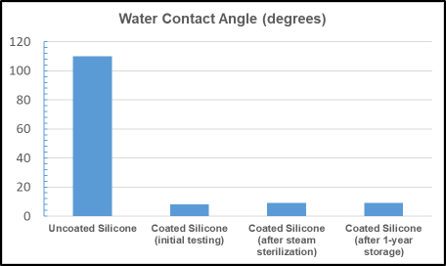
Contact angle < 20° ISO 10993 Tested Anti-fog Performance Steam Sterilization Compatible Long-term Stability
What is superhydrophilic coating?

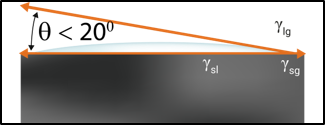
A superhydrophilic coating is a surface treatment that causes water to spread instantly and uniformly across a surface rather than beading into droplets. Superhydrophilicity is defined by a water contact angle below 20° — surfaces with contact angles near 0° are classified as completely wetting. In medical device applications, superhydrophilic coatings are used to prevent fogging on optical surfaces (such as endoscope lenses and diagnostic imaging windows), to enable uniform fluid distribution on microfluidic devices, and to improve the performance of therapeutic contact lenses. They are distinct from hydrophilic lubricious coatings: superhydrophilic coatings maximize wetting and eliminate droplet formation, whereas lubricious coatings prioritize minimizing friction.

Overview

Transforming surface wettability for clinical performance

MediShield™ Superhydrophilic Coating is engineered to transform medical device surfaces by dramatically increasing their wettability. By promoting rapid and uniform water spreading, the coating enhances visualization, fluid management, and device performance across a wide range of clinical applications.

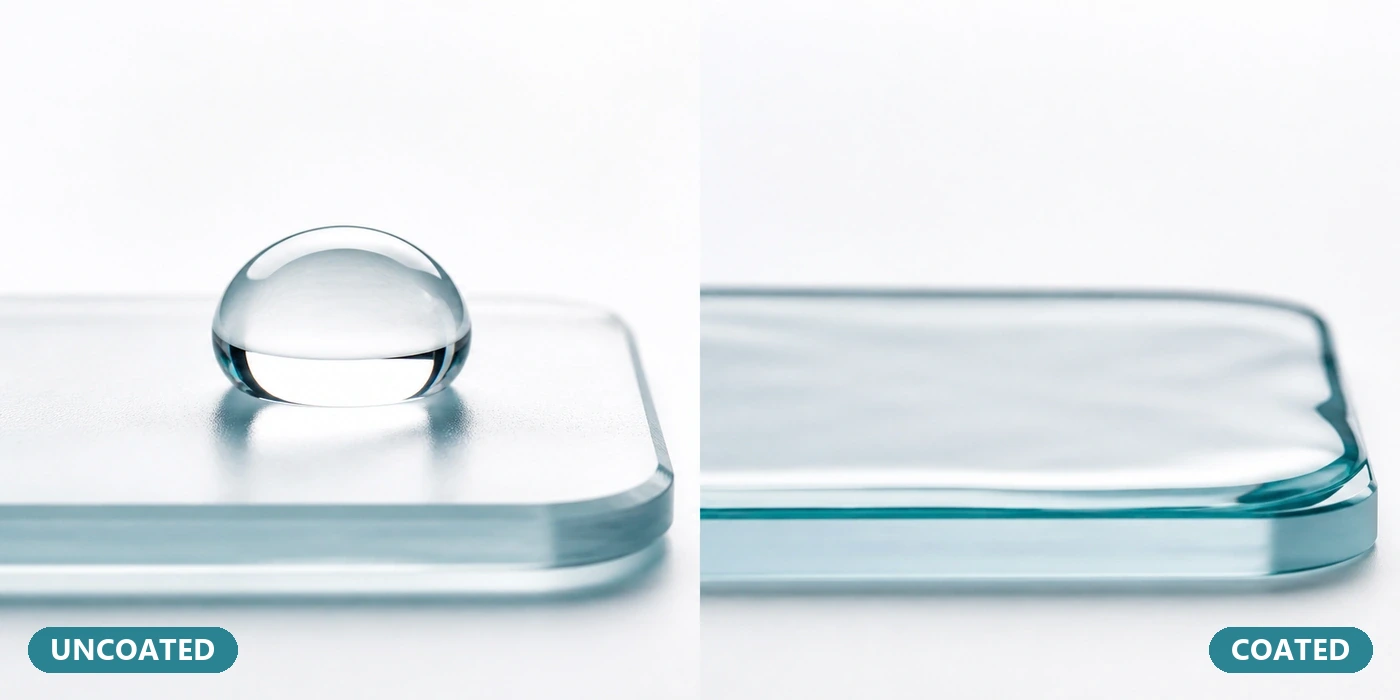
The coating achieves a water contact angle below 20°, creating a surface that water spreads across instantly rather than forming droplets. This is particularly valuable for optical surfaces where fogging can obscure clinical visualization, and for surfaces where uniform fluid wetting improves device function.

Benefits

Biocompatible: Tested according to ISO 10993 standards
Exceptional Hydrophilicity: Water contact angle < 20°
Strong Adhesion: Durable bonding to a wide range of substrates, including silicone
Excellent Stability: Maintains hydrophilicity after long-term storage
Sterilization Compatible: Compatible with common methods including gamma, ETO and steam sterilization

Application examples

Therapeutic contact lenses
Diagnostic imaging windows
Microfluidic devices
Medical device surfaces requiring rapid wetting
Anti-fog applications on optical surfaces
MediShield Superhydrophilic Coating
Performance Data
Water contact angle testing

Water contact angle measurement setup — ASTM D7334 / ISO 19403
Hydrophilic contact angle comparison

MediShield™ Superhydrophilic Coating — water spreads instantly to <20°

Performance specifications

ParameterValue
Water contact angle< 20° (superhydrophilic range)
Wetting behaviorRapid, uniform spreading — no droplet formation
BiocompatibilityTested per ISO 10993
SterilizationSteam (autoclave), EtO, and other common methods
Long-term stabilityMaintains hydrophilicity after storage
Quality systemISO 13485:2016
Frequently Asked Questions

What engineers ask about superhydrophilic coating

What is the water contact angle of MediShield™ Superhydrophilic Coating?
MediShield™ Superhydrophilic Coating achieves a water contact angle consistently below 20°. On many substrates, contact angles approaching 0° are achievable — meaning water spreads completely and immediately with no droplet formation. Exact values for your substrate are characterized during feasibility testing.
What is the difference between superhydrophilic and hydrophilic lubricious coating?
Superhydrophilic coating maximizes surface wetting — water contact angle below 20°, instant and complete spreading — and is used for anti-fog, visualization, and uniform fluid distribution applications. Hydrophilic lubricious coating is optimized for friction reduction — it forms a slippery hydrogel when hydrated and is used for catheters, guidewires, and devices navigating biological tissue.
How long does the superhydrophilic effect last after sterilization and storage?
MediShield™ Superhydrophilic Coating maintains hydrophilicity after long-term storage and is compatible with steam (autoclave), EtO, and other common sterilization methods. The covalent bonding process provides superior long-term stability compared to physically adhered coatings that can degrade over time.
Can the coating be applied to optical-grade silicone or PMMA surfaces?
Yes. The coating process is well-suited to optical polymers including silicone, PMMA (acrylic), and polycarbonate — substrates used in diagnostic imaging windows, therapeutic contact lenses, and endoscope optics. Optical clarity is maintained because the coating is nanometer-scale in thickness.
Does the coating affect optical transmission or surface clarity?
No. The nanometer-scale coating thickness does not measurably affect optical transmission or clarity on transparent substrates. This is a key advantage for endoscope lens and imaging window applications where coating-induced haze would be unacceptable.
Is the coating tested to ISO 10993?
Yes. MediShield™ Superhydrophilic Coating is tested according to ISO 10993 biocompatibility standards.

Enhance your device surface with our coatings.

Contact us to discuss your application and request a feasibility study.