Why implanted devices need biocompatible surface coatings
For implantable and indwelling medical devices and biosensors, biofouling is a significant challenge that can lead to device malfunction, foreign body responses, and infection. The biofouling process typically begins with nonspecific protein adsorption onto the device surface, followed by cellular attachment to the adsorbed proteins.
To mitigate biofouling, hydrogel coatings are commonly applied to resist protein adsorption. By minimizing protein binding, subsequent cell adhesion is significantly reduced, thereby limiting biofouling. As a result, these coatings help improve device performance, reliability, and safety during in vivo use.
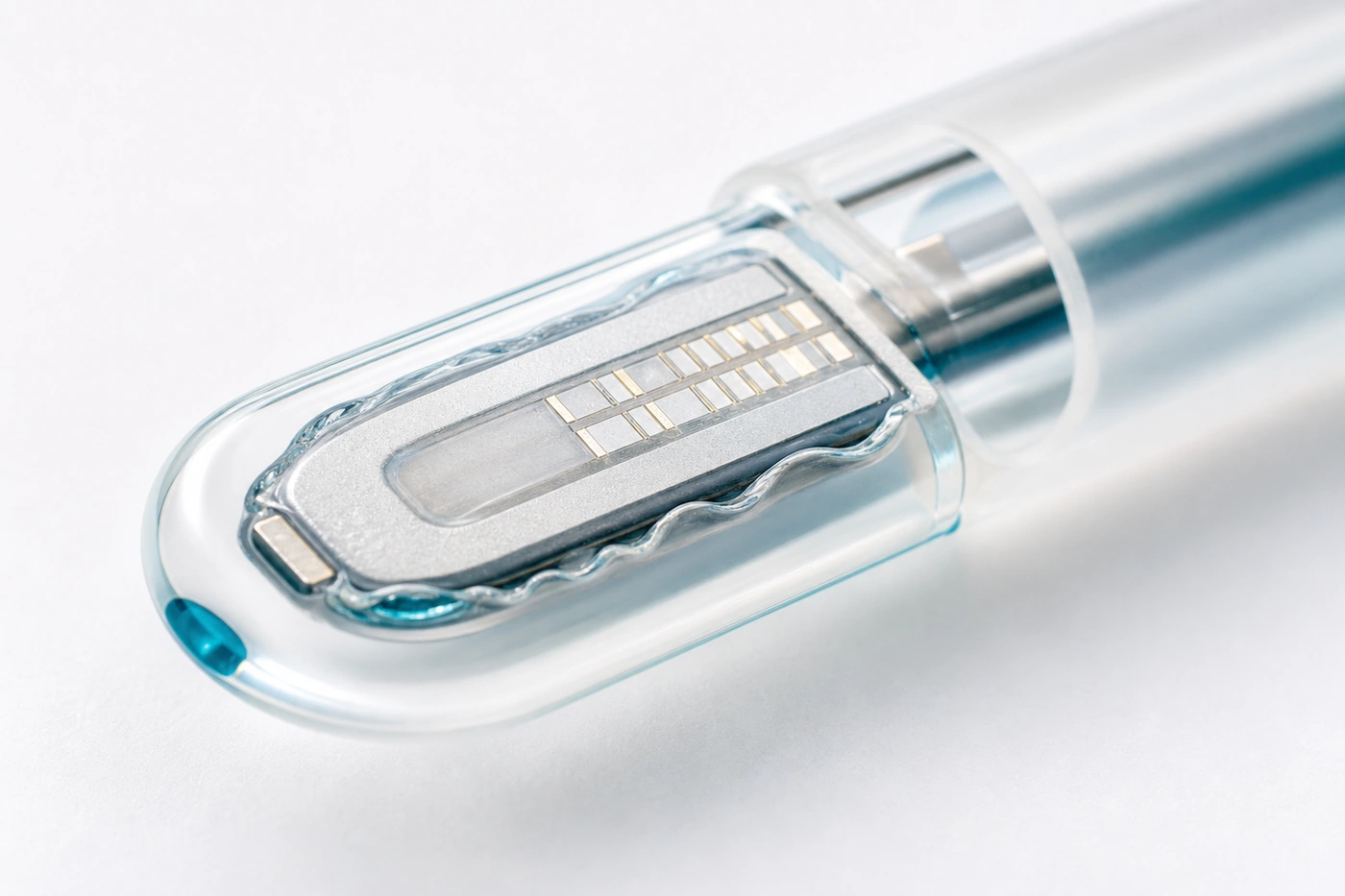
Medical Surface has developed the MediShield™ Biocompatible Coatings (an innovative hydrogel coating) to effectively limit the Foreign Body Response and to significantly extend the life of implanted devices and biosensors.
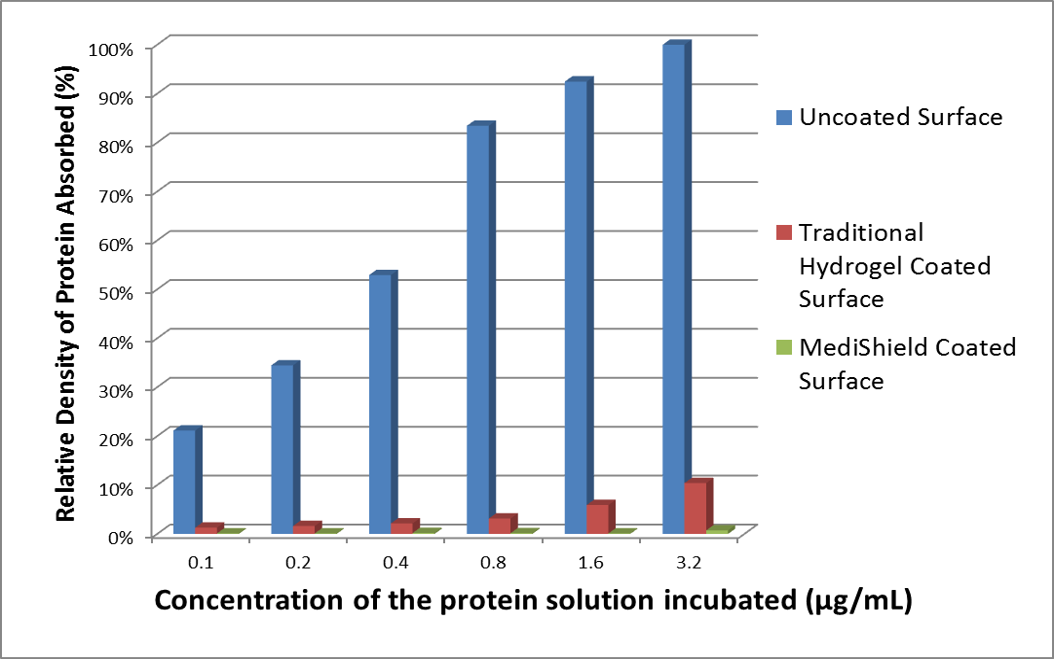
MediShield™ Biocompatible Coating vs. traditional hydrogel — significantly reduced protein binding
Exceptionally Low Protein Binding
The binding of host proteins to the surface of implanted medical devices is recognized to be the beginning of the biofouling process. MediShield™ Biocompatible Coatings have been specifically designed to resist protein adsorption and has significantly reduced protein binding compared to traditional coated hydrogels.
Resistance to Cellular Adhesion
The adsorption of host proteins onto the implant surface, including complement related proteins, leads to an initial inflammatory response at the implant site. Monocytes and macrophages recruit other cells, resulting in the adhesion of cells to the implanted device. MediShield™ Biocompatible Coatings have been shown to resist adhesion of cells during prolonged period of contacting blood samples.
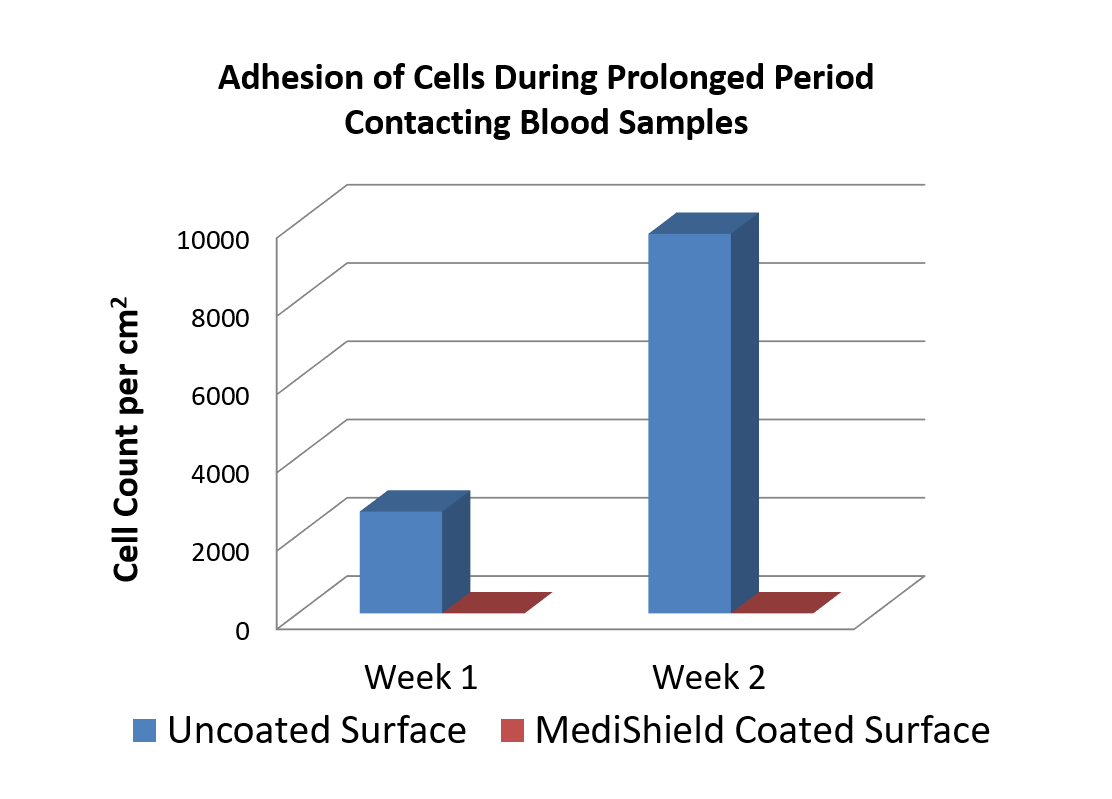
Cell adhesion test — MediShield™ coated surface (red) vs. uncoated control (blue) under blood contact conditions
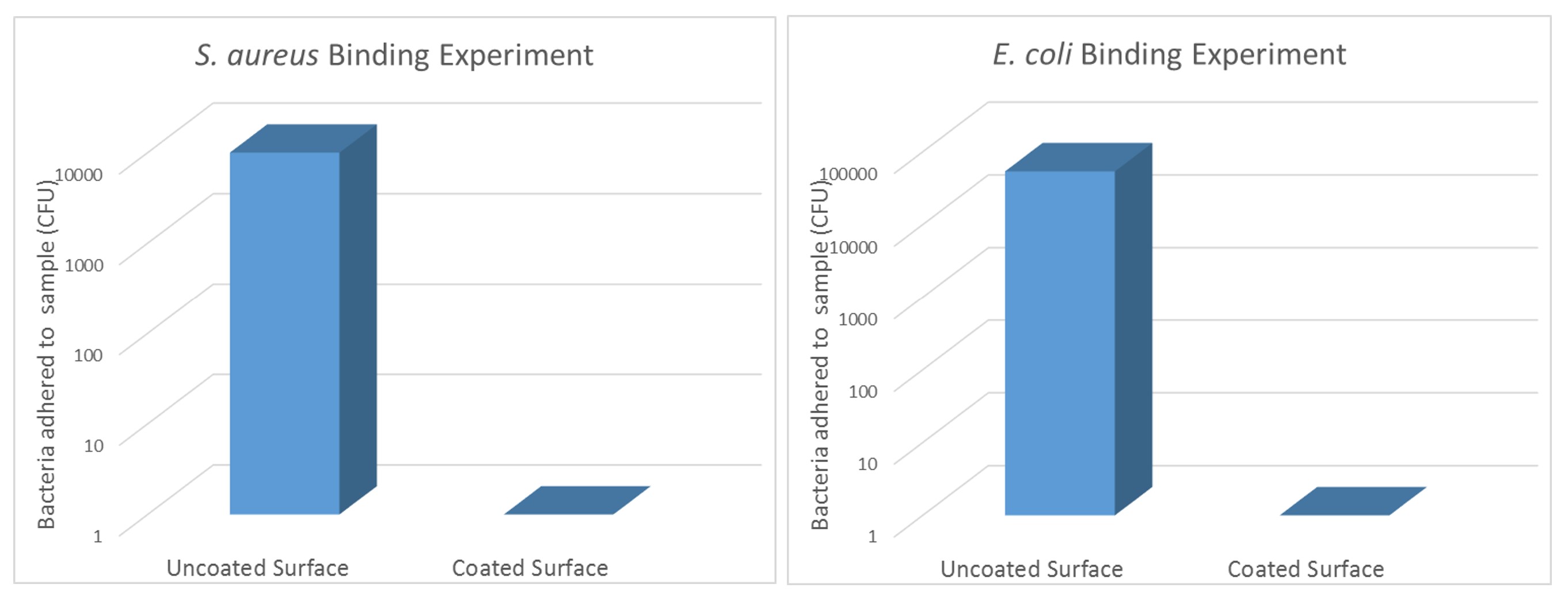
ISO 22196 bacterial adhesion test — S. aureus and E. coli. No detectable bacteria found on MediShield™ coated surface.
Resistance to Bacterial Adhesion
MediShield™ Biocompatible Coatings have been tested for the ability to resist bacterial adhesion. Tests were performed according to ISO 22196. Two types of bacteria were tested: S. aureus and E. coli. In both cases, no detectable bacteria were found to adhere on MediShield™ coated surface.
Permeability to Glucose
Biosensor coatings not only need to create an effective barrier against host cells and proteins, but also need to be permeable to host analytes that are being measured. MediShield™ Biocompatible Coatings have been shown to be highly permeable to glucose, which is essential to glucose biosensor functionality.
In this test, uncoated and coated dialysis membranes (3.5kD MWCO) were compared side-by-side for permeability to glucose. MediShield™ Biocompatible Coatings have been found to have no significant effect on the permeation of glucose across the dialysis membrane.
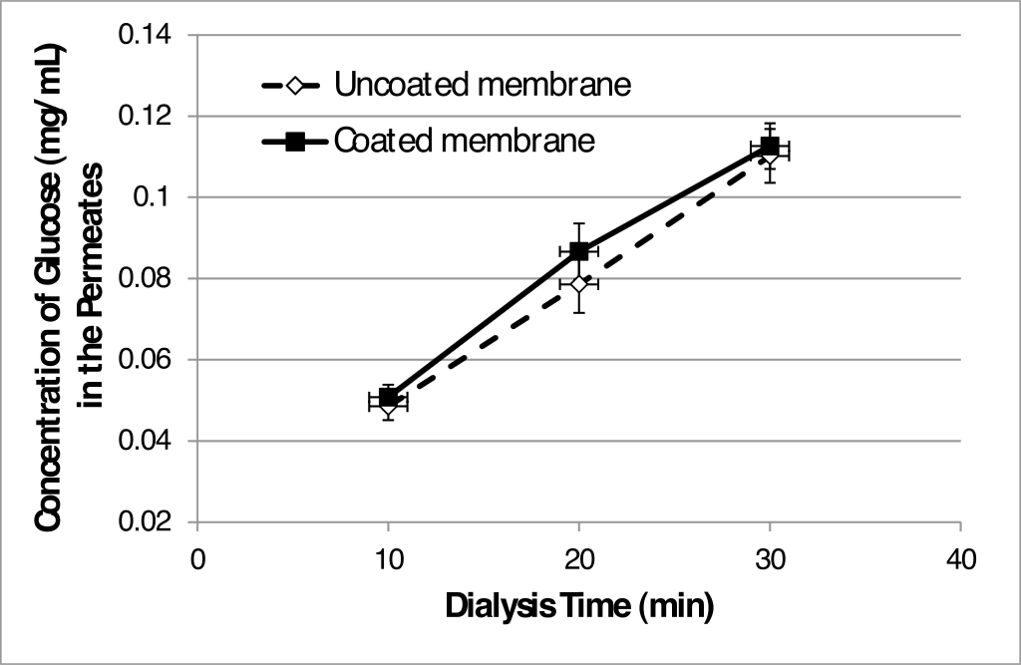
Glucose permeation through MediShield™ Biocompatible Coating vs. uncoated control — no significant difference